Cornerstone guide
Wells, septic, propane, and mountain roads
The unsexy systems that decide whether a Pagosa house is a home or a project.
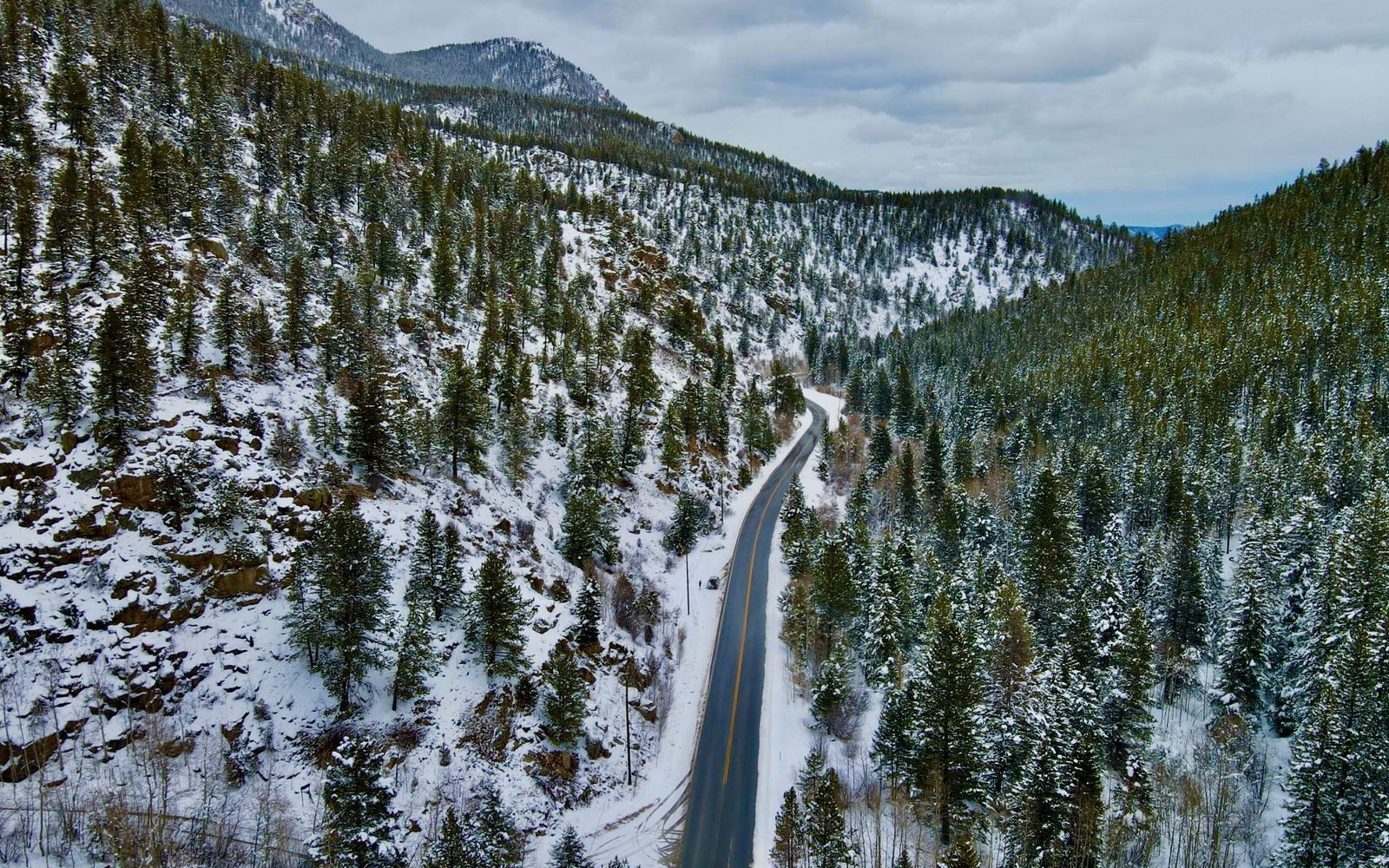
Every pretty listing in this county is sitting on four systems most buyers from the city have never had to think about: water, wastewater, heat, and the road. Get those right and the rest of the house is a house. Get them wrong and you will spend the first year on the phone with people who are already booked until June.
Look at this stuff before you look at the kitchen.
First split: in the district, or on your own
Pagosa Area Water and Sanitation District (PAWSD) is the central water and sewer utility for a large share of the Pagosa-area subdivisions, including much of what people call Pagosa Lakes. If the property is in the district, you are not in a “drill a well and forget it” world.
PAWSD’s rules (January 30, 2025) say that after those rules took effect, construction of any water well or sump inside the district is prohibited unless the district authorizes it in writing. Existing wells may be allowed for irrigation if there is no hazardous cross-connection. When a property connects, the district may require dedication of existing water rights. That is not fine print for attorneys only. It is why a “well on the lot” in a PAWSD neighborhood is not automatically a selling point.
If lines are available, you apply for a connection permit. PAWSD says scheduling can run as far as 60 days out. You have to get other utilities marked (Colorado 811). A road-cut permit comes from the county or the town, not from PAWSD — and Archuleta County Road and Bridge generally will not issue road-cut permits in winter. If you close in October and assume you’ll tap in before Thanksgiving, you may be hauling water or waiting until spring. Buyers learn that the hard way every year.
If you are not in PAWSD — Aspen Springs, many Highway 84 parcels, a lot of true acreage — you are in well-and-septic country, or cistern country. That can be a good life. It is not a set-it-and-forget-it life.
Wells: the permit is the water right you actually have
In Colorado, a well is not “the water under the land, yours to use.” It is a permitted use. The Colorado Division of Water Resources issues well permits. You search existing permits in their Well Permit Search. The common residential application is GWS-44.
Many buyers have heard a version of the 35-acre rule. The useful version, from DWR’s own materials on exempt wells (C.R.S. 37-92-602), is:
- On many parcels under 35 acres, an exempt well is often limited to ordinary household use inside one single-family dwelling — no outdoor irrigation.
- On parcels of 35 acres or more, an exempt permit may allow household use in up to three dwellings, irrigation of up to one acre of garden and lawn, and watering of domestic animals and livestock — if DWR approves those uses on that parcel.
- Exempt wells are generally limited to 15 gallons per minute for those household-type uses.
- DWR can refuse a new exempt well if another water supply is available — which is the statutory hook behind PAWSD’s well prohibition.
Read the actual permit for the house you are buying. The piece of paper is the rule, not the neighbor’s story about watering a hay field. Change-of-owner filings with DWR update contact information. They do not transfer the land, and they do not expand the uses.
Water quality is a separate question. Archuleta County Water Quality points people to CDPHE’s private-well page and to certified labs. The state lab is not currently doing private drinking-water samples. Sulfur, iron, and hardness are not rare out here. In some west-of-town areas, people talk about mineralized groundwater the way other towns talk about hard water. This guide will not invent a water-quality map. Test the well. Budget for treatment if you need it.
Cisterns exist. They are not a moral failing. They are a truck and a tank and a plan. If the listing says “cistern,” ask how often it is filled, in what season, and what happens when the road is closed.
Septic: OWTS, and the sale does not close around it
If you are not on sewer, you have an on-site wastewater treatment system (OWTS) — a septic system, in English. Archuleta County Water Quality Department (ACWQ) runs this now. It used to sit with San Juan Basin Public Health; the county has been transitioning records. If you need an old permit, email [email protected]. Do not assume the seller’s drawer has the only copy.
County regulations require a permit before you install, alter, expand, or repair an OWTS. A 2024 FAQ from the county said a construction permit was $1,075, including design review and up to four on-site inspections. Newer 2026 OWTS regulations took effect July 30, 2026. Fees move. Use the current Water Quality fee schedule, not an old PDF forever.
There is no minimum acreage in the county OWTS regulations, but the same FAQ is honest: lots under one acre are hard, especially if you also need a well or cistern and have to meet setbacks. Central water makes a small lot easier because water-line setbacks are shorter than well setbacks. If soils are poor, you may be looking at an engineered system. Vaults (holding tanks you pump) are a last resort, not a lifestyle brand.
Permits expire. The 2024 regulations said a permit dies after one year if construction has not started, and that failure to finish within two years voids it unless ACWQ extends it in writing. If you buy a vacant lot “with a septic permit,” read the date.
Transfer of title — this is the one that surprises out-of-state buyers
Since January 2019, most sales of property on an OWTS in Archuleta County require a Transfer of Title Acceptance Document from ACWQ. Selling without one is described by the county as illegal and subject to enforcement.
The process, from the county’s own page:
- Get the existing OWTS permit before you list or before you go under contract.
- Acceptance documents are issued for permitted systems, unless the system clearly predates the county’s 1967 permitting program. Unpermitted systems need a permit first.
- Systems under four years old may be exempt from the inspection; ACWQ can issue a waiver. Some buyers still require the inspection anyway.
- Otherwise, a NAWT-certified inspector inspects the system.
- File the Transfer of Title application at least two weeks before closing and pay the administrative fee. A county checklist circulating in 2024 listed that fee as $115.
- If the system fails or isn’t permitted, you permit and repair. If you can’t finish before closing, there are conditional TOT forms the buyer has to agree to, notarized.
Family transfers, certain trusts and LLCs, and some foreclosure steps have exemptions. The next sale after a foreclosure does not. Bedroom count matters: if the assessor’s bedroom count is higher than the permit, the county may make you expand the system. Deals get ugly over a “bonus room.”
If you are on PAWSD sewer, you skip this particular circus. You do not skip the rest of the house.
Propane, and the places that actually have gas
A lot of Pagosa heats with propane. Some pockets have natural gas — PLPOA’s 2025 service-provider list includes Black Hills Energy for gas specs and a local service number. Electricity is La Plata Electric Association (LPEA).
This guide will not quote a propane price. It moves, and a tank that is 20% in January is a different emergency than a tank that is 20% in June. What to ask:
- Ask whether the tank is owned or leased, and what the buyout is.
- Ask when it was last filled and what the seller’s annual gallons looked like. Two winters of bills beat one showing.
- A vacant second home that keeps a low heat-setback still burns fuel. A house left at 45°F is not “off.”
- Delivery depends on the road. See below.
Electric heat pumps are showing up. At 7,000 feet, with these temperature swings, treat them as a system you size carefully, not as a morality play. Wood stoves are common and they are also a maintenance and insurance conversation. If the house is all-electric on a wind-scoured ridge, read the January bill before you congratulate yourself on “no propane.”
The road is a utility
A good kitchen does not matter if the road is a rumor after six inches of snow.
There are three road stories in this county, and buyers mix them up.
1. Town streets. In Pagosa Springs, you are on a municipal street system. It is the closest thing the county has to “someone will get this.”
2. County roads. Archuleta County Road and Bridge (970-264-5660) maintains county roads and does snow removal on the roads it is responsible for. A lot of roads inside Pagosa Lakes are public roads, not owned by PLPOA — the association’s own 2025 board discussion said that out loud. County maintenance does not mean “plowed at 5 a.m. before you leave for DRO.” It means there is a public crew and a public priority list. Outlying roads wait.
3. Private roads, driveways, and metro-district gravel. If the plat says private, you and your neighbors are the road department. In Aspen Springs, roads are gravel and associated with the Aspen Springs Metropolitan District, not with a covenant-heavy HOA. A long steep driveway is its own special district of one: you, a plow guy, and whatever you agreed to pay him in October.
PAWSD will not save you here. They will not even cut the road in winter so you can tap a water line.
Ask, in writing:
- Who owns the road?
- Who plows it, and in what order?
- Is there a recorded road-maintenance agreement?
- What is the driveway grade, and does a two-wheel-drive car actually make it in February?
- Where does the school bus stop?
- Can a propane truck, an ambulance, and a well driller get in?
If the answers are shrugs, the price of the house is missing a line item. More of those line items are in the true cost of a mountain home.
A buyer’s order of operations
This is a useful sequence on any property that is not a plain townhome on sewer:
- Water source. PAWSD connected, PAWSD available-but-not-connected (you will pay availability fees either way — see the cost guide), well with a permit you have read, or cistern.
- Wastewater. PAWSD sewer, or OWTS with a permit, inspection path, and bedroom count that matches the house you think you are buying.
- Heat. Gas, propane (owned or leased tank), electric, wood. Two years of bills.
- Access. Town, county, metro district, or private. Snow plan. Grade.
- Then the view.
If you are comparing west-of-town convenience to a cabin up a Forest Service-adjacent road, read neighborhoods next and second homes before you tell yourself you’ll be here “every month.”
Houses that make their own water and handle their own waste can be a good life. They are a better life when the buyer knew that on the first visit, not at the inspection deadline.
Sources
- Pagosa Area Water and Sanitation District, Rules and Regulations (Jan. 30, 2025): wells and sumps prohibited in the district without written authorization; connection-permit process. https://www.pawsd.org/downloads/Rules-and-Regulations_Jan-30_25_Clean.pdf
- PAWSD, New Connection Information: up to 60 days to schedule; Colorado 811; road-cut permits from county (970-264-5660) or town (970-264-4151); county generally will not issue road-cut permits in winter. https://www.pawsd.org/customer-care/new-connections/
- PAWSD, Rates and Fees (retrieved 2026): monthly base water $34.35, sewer $50.18, both $84.53 including 2,000 gallons; availability charges; 2026 connection and capital-investment fees. https://www.pawsd.org/customer-care/rates-and-fees/
- Colorado Division of Water Resources, Well Permit Search. https://dwr.state.co.us/tools/wellpermits
- Colorado DWR eForms: GWS-44 residential well permit; change-of-owner is contact information only. https://dwr.state.co.us/eForms/
- Colorado DWR guideline on uses of water from exempt and small-capacity wells (C.R.S. 37-92-602): household use, 15 gpm, 35-acre pattern, one-acre irrigation cap. https://www.gweoa.org/media/gw_docs/DWR_Guideline_2023-01.pdf
- C.R.S. 37-92-602 (exempt well uses). https://codes.findlaw.com/co/title-37-water-and-irrigation/co-rev-st-sect-37-92-602/
- Archuleta County Water Quality Department: OWTS program; 2026 regulations effective July 30, 2026; office 1122 Hwy. 84; (970) 264-1390. https://www.archuletacounty.gov/county-government/development-services/water-quality-department/
- Archuleta County OWTS FAQ (PDF posted Nov. 2024): construction permit $1,075; no minimum acreage; small-lot setback caution. https://www.archuletacounty.gov/wp-content/uploads/2024/11/Frequently-Asked-Questions-about-OWTS-PDF.pdf
- Archuleta County OWTS Regulations 2024: permit before install/alter/repair; 1-year / 2-year timelines. https://www.archuletacounty.gov/wp-content/uploads/2024/11/Archuleta-County-OWTS-Regulations-PDF.pdf
- Archuleta County, Transfer of Title: program since January 2019; NAWT inspection; 1967 permit era; 4-year waiver; exemptions. https://www.archuletacounty.gov/county-government/development-services/water-quality-department/transfer-of-title/
- Archuleta County TOT process checklist (PDF): $115 fee; apply at least two weeks before closing. https://archuletacounty.gov/wp-content/uploads/2024/11/Transfer-of-Title-Process-Checklist-PDF.pdf
- PLPOA 2025 service-provider list: LPEA (970-247-5786); Black Hills Energy; County Road & Bridge for road maintenance and snow; PAWSD (970-731-2691). https://www.plpoa.com/wp-content/uploads/sites/2360/2025/06/2025-Service-Providers-06.2025.pdf
- PLPOA board packet / minutes discussion, Aug. 12, 2025: PLPOA roads are public per plat maps; not owned by the association; county in discovery/maintenance conversation. https://www.plpoa.com/wp-content/uploads/sites/2360/2025/08/Owner-AGENDA-8.12.25_compressed_compressed.pdf
- Aspen Springs community site: large 1960s-era subdivision in six units on U.S. 160 west. http://www.aspenspringspagosa.com/about.html